top of page


TRANSFORMATIVE SCENARIO PLANNING
What It Is, How Accompaniment and Appreciative Inquiry Support It, and Why It Matters Most for Nonprofits What Do We Mean by “Transformative Scenario Planning”? Most planning tools assume the future is something an organization needs to predict and adapt to. Transformative Scenario Planning (TSP), developed by Adam Kahane of Reos Partners, starts from a different assumption: in situations that are genuinely stuck, complex, conflictual, and not working, the future isn't someth

David Siburg
11 hours ago7 min read


POWER SHARING AND RECIPROCITY
Why They Matter, and Why Nonprofits Need Them Most What Do We Mean by Power Sharing and Reciprocity? Almost every relationship between organizations, or between an organization and the people it serves, carries some imbalance of power, who has the money, who has the expertise, who gets to define the problem, who gets to decide when it's solved. Power sharing is the deliberate practice of noticing that imbalance and redistributing decision-making authority rather than simply m
David Siburg
Sep 146 min read


COMPLEX ADAPTIVE SYSTEMS
Why This Lens Matters, and Why Nonprofits Need It Most What Do We Mean by a “Complex Adaptive System”? Most organizational management assumes something simple underneath all the complexity: that if you understand each part well enough, each department, each program, each policy, you can predict how the whole will behave. A complex adaptive system (CAS) doesn't work that way, and organizations, as it turns out, are complex adaptive systems far more often than the org chart sug
David Siburg
Sep 76 min read


PURSUING THE COMMON GOOD
Why It Matters, and Why It Depends on Staying Purpose-Focused Every organization can point to who it serves, customers, clients, members, donors. Fewer stop to ask a harder question: does the way we serve them also leave the wider community better off, or are we simply extracting value from it? The common good is the idea that an organization's purpose shouldn't stop at its own stakeholders, that genuine success is measured, at least in part, by whether the community, sector,
David Siburg
Aug 316 min read


Collective Leadership: An Answer to the World's Great Challenges
The wicked leader is he whom the people despise. The good leader is he whom the people revere. The great leader is he of whom the people say, "We did it ourselves." - Lao Tzu, Chinese Philosopher, 604-531 BCE Today, leaders who catalyze collective leadership are considered innovative and believed to be critical for the times in which we now live.1 Yet, as read in the words of Chinese philosopher, Lao Tzu, such leadership has been valued for over 2,500 years. American system

Thomas Francis-Siburg
Aug 316 min read


CAPACITY LEVERAGING
What It Is, Why It Matters, and Why Nonprofits Need It Most What Do We Mean by “Capacity Leveraging”? Most organizations think about capacity the same way: build it internally. Hire the right people, train them well, tighten the systems, grow the budget. That instinct isn't wrong, but it's incomplete, and it quietly assumes something that usually isn't true, that an organization has to generate every capability it needs from inside its own four walls. Capacity leveraging star
David Siburg
Aug 247 min read


Collective Action and the Inclusion of Diversity
Creating more ideas, more effective problem-solving and greater chances of success.
Thomas Francis-Siburg
Aug 248 min read


CAPACITY BULIDING
What It Is, Why It Matters, and Why Nonprofits Can't Afford to Skip It What Do We Actually Mean by “Capacity”? Every organization, at some point, runs into a version of the same wall: the mission is clear, the need is real, and the will is there, but something is missing that keeps the work from landing the way it should. That missing something is usually capacity. It's worth pausing on the word itself, because it gets used loosely. Capacity is the ability to do things, to ad
David Siburg
Aug 176 min read


Trust
The lubricant and glue that makes working together possible. Community comes in a variety of shapes, sizes and forms. In common between these varieties is a collaboration between people of the community. Found at the heart of this collaboration is a basic trust in one another. This trust is expressed in different ways across different parts of communities. It is characterized by at least one person being willing to rely on the actions of at least another person. This trust is
Thomas Francis-Siburg
Aug 109 min read


APPRECIATIVE INQUIRY
What It Is, Why It Matters, and Why Nonprofits Need It Most What Do We Mean by “Appreciative Inquiry”? Almost every organizational change process starts the same way: find the problem. Do a needs assessment, a gap analysis, a root-cause investigation, identify what's broken so it can be fixed. It's such a familiar sequence that it rarely gets questioned. Appreciative Inquiry (also referred to as "AI", not artificial intelligence) questions it directly. Instead of asking “what
David Siburg
Aug 106 min read


ACCOMPANIMENT
Accompaniment - What it is, Why it matters, and Why nonprofits need it most
David Siburg
Aug 36 min read


Collaboration Achieves Success
It is in the self-interest of groups to collaborate as they achieve more than they could by themselves.
Thomas Francis-Siburg
Aug 16 min read


Community-Focused Betterment:Windhoek, Namibia
Community members leveraged skills, passions, resources and capacity to strengthen overall community betterment.
Thomas Francis-Siburg
Jul 18 min read


Local Wisdom in Community Planning
People experiencing any given situation are the experts.
Thomas Francis-Siburg
Jun 14 min read


Community Resilience
The ability to bounce forward by people and the systems they depend on.
Thomas Francis-Siburg
Sep 1, 20208 min read
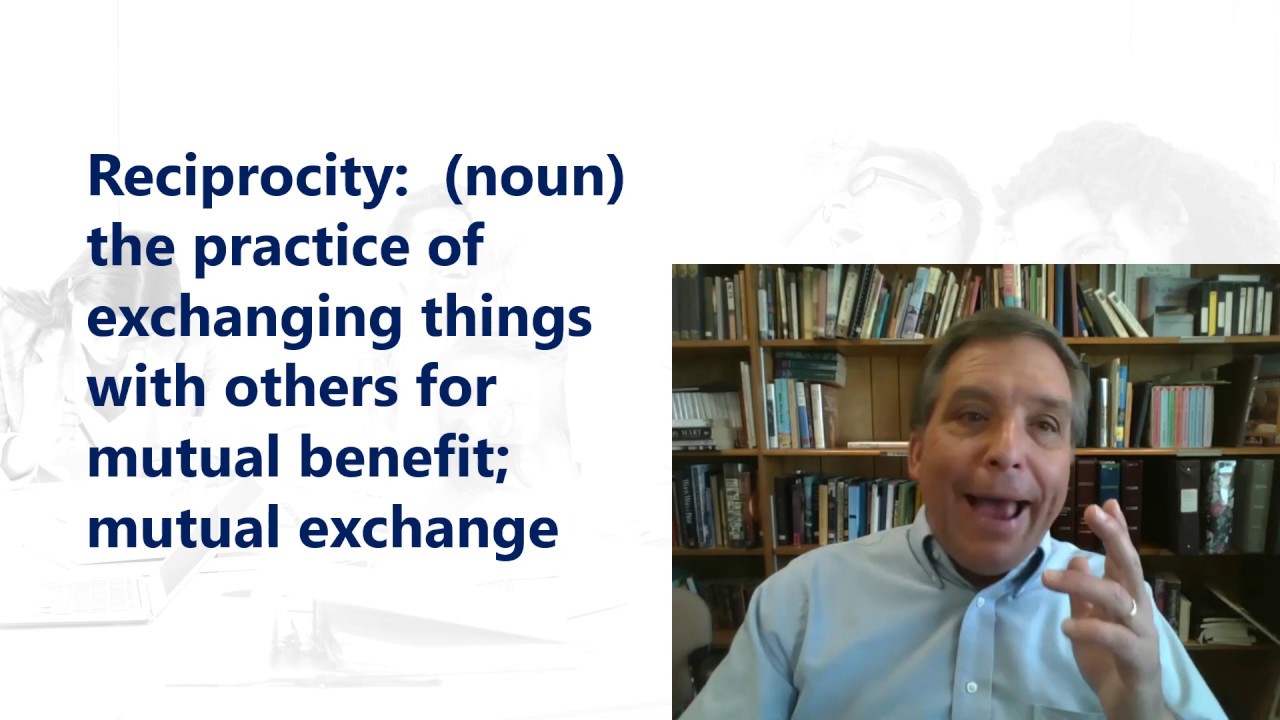
The Power of Reciprocity
This video gives you 5 to 10 tested strategies and actions on how reciprocity is a powerful tool in accomplishing your goals and supporting the goals of others.
David Siburg
Jun 19, 20201 min read

Rethinking How We Work -- OR -- A Mind Is A Terrible Thing To Waste
Current events are starkly exposing the weaknesses of traditional hierarchical, change-of-command, organizational structures and jobs where individual minds become like cogs in a mechanism. A mind is truly a terrible thing to waste. And so, I give you easy to understand and easy to enact strategies and actions to change use each other's minds and ultimately rethink how we traditionally work.
David Siburg
Jun 8, 20201 min read
How to Get Really Important Stuff Done
This video gives you steps and a model on how to share resources to accomplish your goals and missions and work with others to accomplish theirs.
David Siburg
May 25, 20201 min read

How to Deliver On Your Organization's Purpose if the Pandemic Caught You By Surprise
Many people and organizations were caught by surprise by and unprepared for the "new normal" created by the pandemic. Here, I give you easy to understand and easy to enact strategies and actions to get you delivering on your purpose.
David Siburg
May 17, 20201 min read


The basics of Scenario Planning
The chessboard of thinking and acting strategically. Change is inevitable. It is a universal truth. No matter how much effort is spent in preventing change, there is no way to stop it. Because it is unavoidable, there are then only two options: do or do not plan for the change. Change can be good or even bad, and it affects individuals, groups, communities and whole regions. The real question is whether or not preparations have been made for potential and inevitable change. E
Thomas Francis-Siburg
Jan 1, 20206 min read
bottom of page